Guide the way to resilient recovery
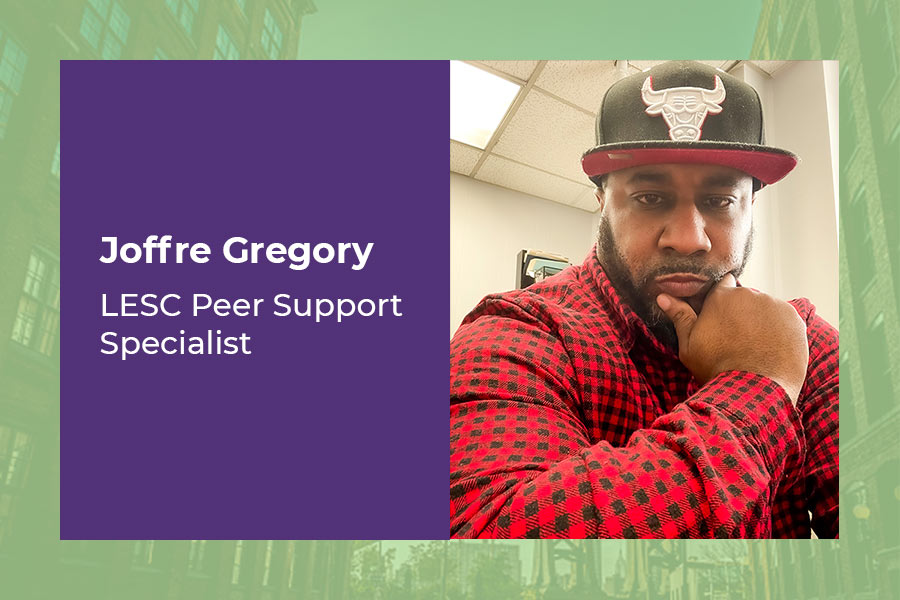
Peer support workers at LESC Dual Recovery Services (DRS) are people who have been successful in the recovery process and dedicated to supporting others through similar circumstances. Through shared understanding, respect, and mutual empowerment, Peer Support Specialists can help those in need stay engaged in the recovery process and reduce the likelihood of relapse. “Not everybody comes in clean in their recovery process. As an outpatient facility that deals with dual recovery services, our clients have a mental health component and a substance use component that they are working to address,” LESC Peer Support Specialist Joffre Gregory explained.
Peer Support Specialists offer lived experience
LESC Peer Support Specialists offer a unique understanding and perspective. Knowing that someone is successfully navigating their own recovery journey can certainly build a bond of trust between a client and a Peer Support Specialist. They are essentially recovery coaches – people who have been successful in the recovery process and work alongside others experiencing mental, emotional or substance use challenges. Because support is coming from a peer, rather than a therapist, counselor or psychiatrist, Peer Support Specialists offer a unique connection and valuable perspective. “Our Peer Support Specialists have been in the process of recovery, so we're able to navigate clients through the process in a different kind of way,” Joffre added. “So, our clients don’t ever have to go through it alone.”
“I'm a graduate of the LESC Su Casa Medication-to-Abstinence Residence. Prior to that, I was a city employee for 15 years,” Joffre offered. “And unfortunately, I lost everything and had to rebuild from scratch. Part of that process was going through long-term treatment where I gained the tools to rebuild my life and I learned how to live and become a productive member of society.” At LESC, this shared experience of recovery creates a strong bond between Peer Support Specialists and clients working on their recovery. They possess a genuine empathy and understand the difficulties that arise when mental health and substance use issues disrupt daily life. Having walked the same path, they are uniquely positioned to assist you in achieving your goals and realizing your full potential.
Personal experience backed by practical credentials
Having guidance and support from someone who has “been there” is what many in recovery value the most about peer support services. LESC Peer Support Specialists are not only equipped with personal experience, but they have also earned the necessary credentials to provide active support. Backing their lived experience with education and training helps our LESC Peer Support Specialists effectively extend the reach of treatment beyond a clinical focus. While in recovery, getting peer support provides a knowledgeable sounding board, help provide practical coping strategies, and offer hands-on assistance. Beyond serving as mentors, they become a beacon of hope and inspiration for clients embarking on their recovery journeys. They share from their own personal experiences to help you identify workable strategies you can successfully implement into your own life. They can offer insight for dealing with mental illness and substance use, and how these issues can impact work, relationships, finances, health and more. They genuinely want to see you recover. Their knowledge, experience, and support can help guide clients in the following areas:
- Provide practical assistance
- Teach important coping skills
- Offer emotional support
- Connect you with vital support resources
- Explore employment opportunities
Committed to giving back
“After my time at Su Casa, I used to come back to the LESC community and share what life looks like on the outside.” Joffre described visiting and sharing his experience, strength, and hope as a volunteer, prior to being hired as a Peer Support Specialist. “I continued to carry on the tradition of giving back to younger peers and walking them through the process.”
Today, Joffre facilitates peer-based recovery groups and sees the important part they play in a client’s recovery. “These groups give the clients a place where they are comfortable expressing exactly where they're at in treatment, without fear of being looked at in a particular way. Sometimes they feel as if the dynamic is client versus counselor in a small group setting, so they may hold back,” Joffre explained. “In peer groups, they don't have to hold back.”
Recovery is possible
Because LESC Peer Support Specialists have been successful in their own recovery process, they’re able to focus on helping our clients reach their goals and achieve their potential. “It's a great feeling when you do find a client that finally gets it right,” Joffre expressed. “It finally clicks, you can see it. It's something that you can see and something that you can feel. It takes a trained eye and spirit to connect with that. You see somebody refrain from their active addiction, even for a time, no matter whether it's a day or a few years, and when you see that, it's a great feeling because they're capable right now of staying clean.”