Since 1982, the LESC Continuing Day Treatment (CDT) Program has been serving New York’s Chinese community and family members of those with serious depression, schizophrenia, or bi-polar mental health disorders. LESC found that there were a significant number of Chinese Americans struggling in isolation with serious mental illness with no one to take care of them. In addition, unaddressed mental illness would often lead to complications with substance use, homelessness, and cognitive deficits.
LESC CDT Program serves NYC’s Chinese American clients struggling with:
- Schizophrenia
- Bipolar Disorder
- Depression
- Schizoaffective Disorder
- Major depression with psychotic features
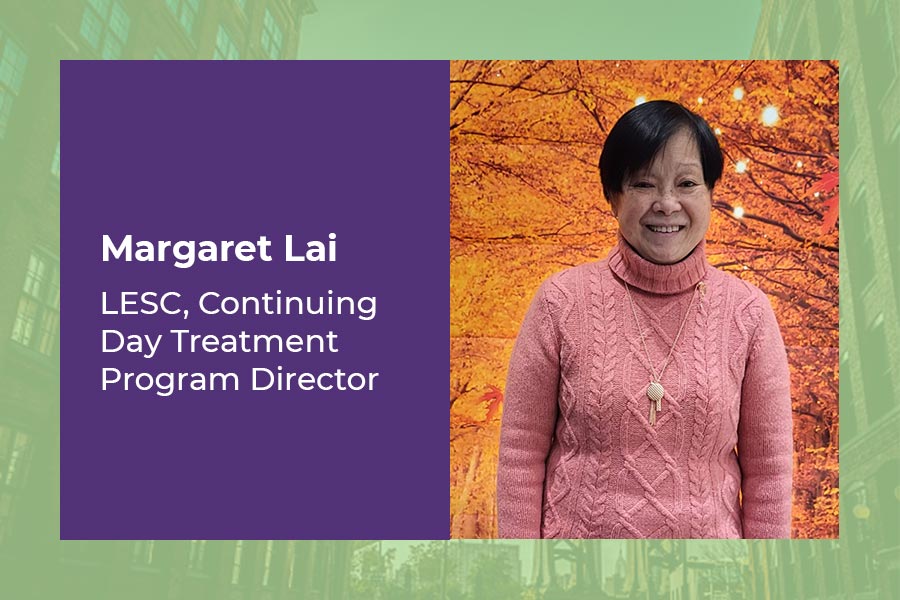
“These individuals have really lost their ability to function in society. They are an ignored and neglected population. We work with them to set short-term and long-term goals as part of their individual treatment,” Margaret Lai, LESC CDT Program Director explained. “It’s important for them to know their own strengths and weaknesses so we can encourage them to empower those strengths and reduce their weaknesses. This also gives them the courage and confidence to face their challenges, reducing the need for hospitalization.” Margaret has been working with the LESC CDT Program from the time she was a college intern from Hunter College School of Social Work.
Licensed by the New York State Office of Mental Health, this integrative program provides an important source of hope for Asian clients with serious mental illness – starting with goal setting as well as support and moving toward specialized education, training, and workplace development. The LESC CDT Program offers individual, group, and family counseling that can help clients deal with the stress of daily living through crisis intervention, healthcare, relaxation techniques, psychoeducation, medication management, and job preparedness.
LESC CDT Program services:
- Psychiatric diagnosis and treatment
- Individual, group, and family counseling
- On-site psychiatrist for medication therapy
- Crisis intervention
- Case management
- Mental health and physical health education
- Relaxation techniques
- Life skills
- Weight management
- Job preparedness
- Entertainment events and recreational activities
LESC CDT Program clients participate in 4-hour treatment sessions 5 days each week. “This type of daily rehabilitation program is the most effective method of treatment for this population of mentally ill patients because they are disconnected from the world and our community,” Margaret explained. “They are lost. If something happens to them, they don’t know how to deal with it. They’re scared to meet people and afraid to face the future.” The goal of the CDT Program is to help clients improve self-esteem, social connectedness, and self-sufficiency. “Our focus is to teach them the principles of how to live. Without these principles, and without love, caring, and human connection, they will not find happiness,” Margaret offered. “We gradually help them understand that there is value in their lives. We simply cannot let them continue with the mindset that when sad feelings arise, suicide is ever an option. And we help them understand how chaotic and troubling this dynamic is to their family and loved ones, too.”
LESC CDT Program Evidence-Based Practices:
- Motivational Interviewing
- Trauma-Informed Care
- Cognitive Behavioral Therapy
- Acceptance and Commitment Therapy
- Solution-Focused Therapy
- Family-Focused Therapy
- Harm Reduction
- Here and Now Approach – to develop client-centered care
Regular psychiatric assessments and evaluations help clients manage their medications. Group sessions help improve family support by educating family members on the psychodynamics of living with a loved one experiencing evolving mental health needs. “There are still many misconceptions in the Chinese community about mental health conditions,” Margaret explained. “Many still believe that clients who hear voices are not dealing with symptoms of mental illness, but instead have been attacked by evil spirits. Or they may believe that their loved one is afflicted by some generational curse. That often leaves our clients dealing with the added burden of stigma – causing guilt, fear, self-blame, and internal conflicts.”
“It takes a positive approach, care, and understanding, but recovery is possible,” Margaret offered reassuringly. The LESC CDT Program helps clients achieve stability through a highly structured daily schedule of therapeutic activities and services. After participating in the program for a period of time, LESC CDT clients begin to feel like they are at home. And with the support of counselors, social workers, case managers, and vocational trainers, LESC CDT clients may eventually return to the workforce.
LESC CDT client outcomes:
- Reduced hospitalizations
- Improved capacity with daily independent living skills
- Medication adherence
- Better communication skills
- Participation in community activities
The recipe for hope and healing starts with human kindness
Every weekday, LESC CDT clients share a healthy home-cooked meal together – working as a family to prepare the meal, set the table, share conversation, clear the table, and wash dishes. This type of family-style teamwork helps clients make important social connections and learn important practical life skills. The LESC CDT family of staff and clients want to share one of their favorite recipes with you.
Ma Po Tofu on Rice
This recipe for Ma Po Tofu on Rice is one of the Continuing Day Treatment clients’ favorite lunches. It is a Chinese stir-fry and simple dish for a satisfying supper, too. This recipe is good for 4 servings (serving size: 1/2 cup rice, about 2/3 cup tofu mixture, and about 1 tablespoon onions).
Ingredients:
- 1 (1-pound) package reduced-fat firm tofu, cut into 6 slices
- ½ cup fat-free, less-sodium chicken broth
- 1 tablespoon cornstarch
- 2 tablespoons low-sodium soy sauce
- 1 tablespoon oyster sauce
- 1 to 2 teaspoons chili garlic sauce (such as Lee Kum Kee)
- 4 ounces lean ground pork
- 1 tablespoon grated peeled fresh ginger
- 3 garlic cloves, minced
- 2 cups hot cooked long-grain brown rice
- ⅓ cup chopped green onions
Instructions:
Step 1: Place tofu slices on several layers of paper towels; cover with additional paper towels. Place a dinner plate on top of covered tofu; let stand 30 minutes. Remove plate, discard paper towels. Cut tofu slices into 1/2-inch cubes.
Step 2: Combine broth, cornstarch, soy sauce, oyster sauce, and chili garlic sauce, stirring with a whisk.
Step 3: Heat a large nonstick skillet over medium-high heat. Add pork; cook 4 minutes or until done, stirring to crumble. Add ginger and garlic; cook 1 minute, stirring constantly. Add tofu; cook 4 minutes or until golden, stirring frequently. Add broth mixture to pan. Bring to a boil; cook 1 minute or until mixture thickens. Remove from heat.
Step 4: Serve tofu mixture over rice. Sprinkle with onions.
The CDT Program is my safe haven. It is also my second home. I was a patient with mental illness before I began this program, and I had no friends. Now that I attend the program, I understand more about my illness and how to manage it. I felt lonely in the past with very little confidence. Today, I am confident and hopeful. CDT lights up my life and makes me smile.
After joining the CDT Program, I have not been hospitalized in 7 years. I used to be admitted to the hospital once every two years. In fact, I had 10 hospital admissions in the past 10 years with 7 suicidal attempts.
After coming to the CDT Program in 2013, I am very happy. [The program] helps me a lot. I have experienced some changes. I used to have some problems in my health every day. I am now recovered. Thank you!
Must have Medicaid
- Adults who are 18 and older
- Serves Cantonese and Toi Shenese speakers struggling with mental and emotional issues – including major depression, schizophrenia, and bi-polar disorder.
Languages: Cantonese, Toi Shenese
Cost: Reduced Cost based on sliding scale from income
Coverage Area: Residents of the five boroughs in New York City.
Accepted Insurance: Medicaid and Medicaid Managed Care, Health first. If you don’t see your provider listed, just give us a call at 212-343-3563.
A healthier, more fulfilling life can be yours. Call or email us now to arrange a screening interview. A trained intake counselor is waiting to help you begin the admissions process.
Contact: Margaret Lai, CDT Program Director
Cell: 917-440-7742
Office: 212-343-3563
Or email us at: info@lesc.org